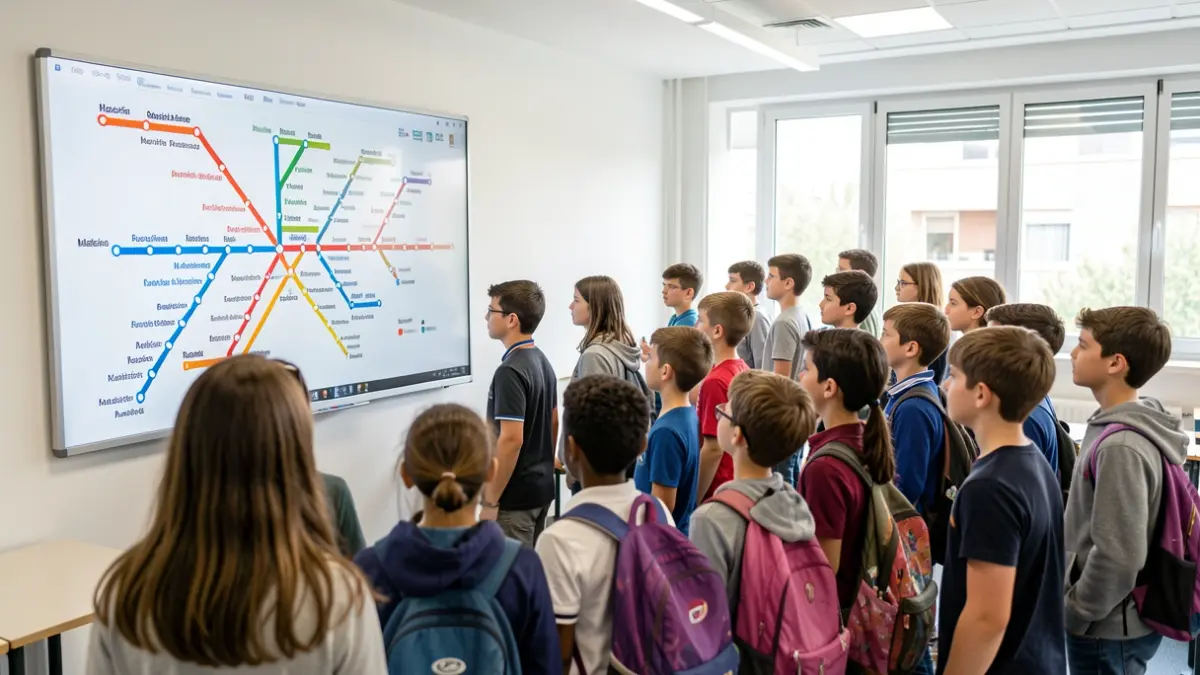
The program aims to teach students how to use the subway facilities safely and autonomously, as well as to inform them about its historical, social, and technological significance. Activities will take place both in schools and at various locations within the Metro network, including the Nave de Motores, the Chamberí Museum Station, the Logistics Center, the Pacífico lobby, and the historic train exhibition at Chamartín.
Content and materials have been updated for this academic year, focusing on practical learning of map interpretation, signage and pictogram identification, correct use of facilities, and accessibility measures. The Minister of Housing, Transport, and Infrastructure, Jorge Rodrigo, presented the program at the Inmaculada Concepción Special Education Center in Carabanchel.
Rodrigo highlighted the program's success, noting that 9,551 schoolchildren participated in the previous edition and that, since its inception in 1982, it has reached approximately 380,000 students from all educational levels.
Additionally, Metro de Madrid develops the LARA program (Support Line for Autonomy Reinforcement), aimed at individuals with intellectual or developmental disabilities. This year, 1,053 students will participate, receiving tools to foster their autonomy in public transport and promote their social, educational, and labor inclusion.
A notable initiative within LARA involves recreating small Metro stations within schools, as done at the Inmaculada Concepción Special Education Center. This allows students to become familiar with subway elements such as entrance portals, corridors, maps, and signage, enabling them to navigate with greater confidence.
AulaMetro remains free of charge and is open to all educational cycles. Interested centers can find information and register through the company's official website.