
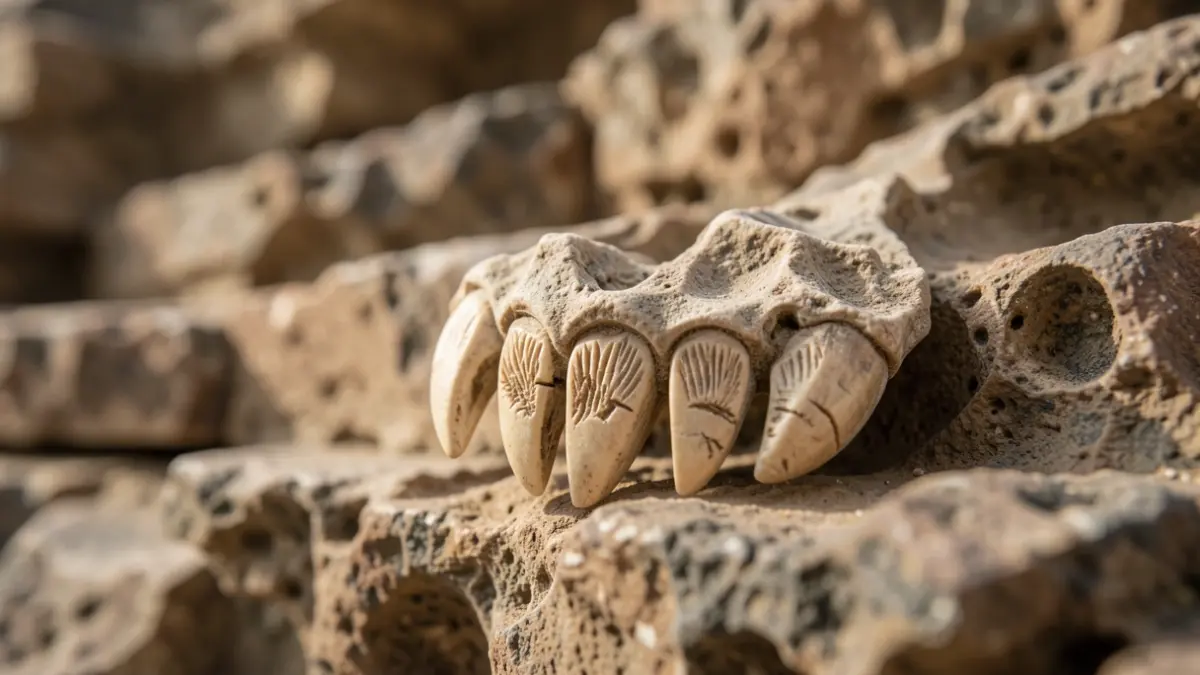
The study, published in the Journal of Mammalian Evolution, analyzed the microwear on 85 fossil teeth of this species from 12 sites in the Madrid and Calatayud-Montalbán (Aragon) basins. These fossils date back to a key period of global cooling known as the Middle Miocene Climatic Transition (between 13.70 and 14.85 million years ago), associated with increased aridity.
Researchers observed dietary differences between basins and over time. In the more humid Calatayud-Montalbán basin, the squirrel consumed more grasses and insects, while in the more arid Madrid basin, the content of dust in food increased, a typical indicator of dry environments. "As the climate became more arid during the Middle Miocene, the dust content in the food consumed by H. rubricati increased, a phenomenon typical of more arid environments," notes Álvaro Quesada, a predoctoral researcher at UCM and lead author of the article.
This finding provides insights into the species' dietary flexibility in response to environmental changes, going beyond conventional static dietary classifications. "Reconstructing the diet and habitat of extinct species is fundamental to understanding how environmental changes may have driven mammal evolution," states Manuel Hernández Fernández, a professor at UCM.
The methodology involved photographing standardized areas of the fossil teeth's chewing surfaces and counting wear marks, each type associated with a different food source. The involuntary consumption of environmental dust, one of the recorded marks, provides information about the environment's aridity. The study thus validates dental microwear analysis as a paleoclimatic tool.
Researchers plan to apply this methodology to other sedimentary basins and micromammal species to reconstruct the climatic evolution of the Iberian Peninsula during the Miocene and understand how mammals responded to these changes. "The ultimate goal is to be able to reconstruct how the climate changed in the Iberian Peninsula during the Miocene and understand how mammals responded to those changes," concludes Iris Menéndez, a researcher at the Museum für Naturkunde Berlin.
Studying how past species coped with aridification and landscape transformation through dietary plasticity offers essential clues for assessing the vulnerability and adaptive capacity of current species in the face of the contemporary climate crisis.