On Wednesday, August 12th, Spain will witness a significant astronomical event. At sunset, a solar eclipse will be visible across much of the Iberian Peninsula, including the Community of Madrid. Later, during the night of August 12th to 13th, the peak activity of the Perseids, popularly known as the Tears of San Lorenzo, will occur.
A solar eclipse happens when the Moon passes between the Sun and Earth, casting its shadow on our planet. This phenomenon will allow viewers to see the Sun partially or totally obscured. This year's eclipse is the first of its kind visible on the Iberian Peninsula since 1905.
The path of totality will cross the Sierra Norte of the Community of Madrid, lasting between 30 and 90 seconds. In the capital, the Moon will obscure over 99% of the Sun, with the partial phase beginning at 7:30 PM and the peak of totality occurring at 8:32 PM.
The Madrid City Council has set up an official observation point in the Valdebebas Forest Park, in the Hortaleza district. This area, with its large green spaces and lower light pollution, is ideal for observation.
For safe viewing, it is essential to use specialized solar observation glasses marked with CE and the reference EN ISO 12312-2:2015. Using other items can cause severe eye damage.
Both the Community of Madrid and the City Council have distributed certified glasses for free at locations such as the Planetarium, the Museum of History, the Museum of San Isidro, the Municipal Printworks, the Conde Duque cultural center, and municipal libraries, although supplies have run out. The ONCE (National Organization of the Blind in Spain) will also distribute 1,700,000 free glasses at its coupon sales points across Spain, in collaboration with the Ministry of Science, Innovation, and Universities.
Those unable to obtain free glasses can purchase protective eyewear from specialized astronomy shops or opticians, with prices around 3 euros per unit.
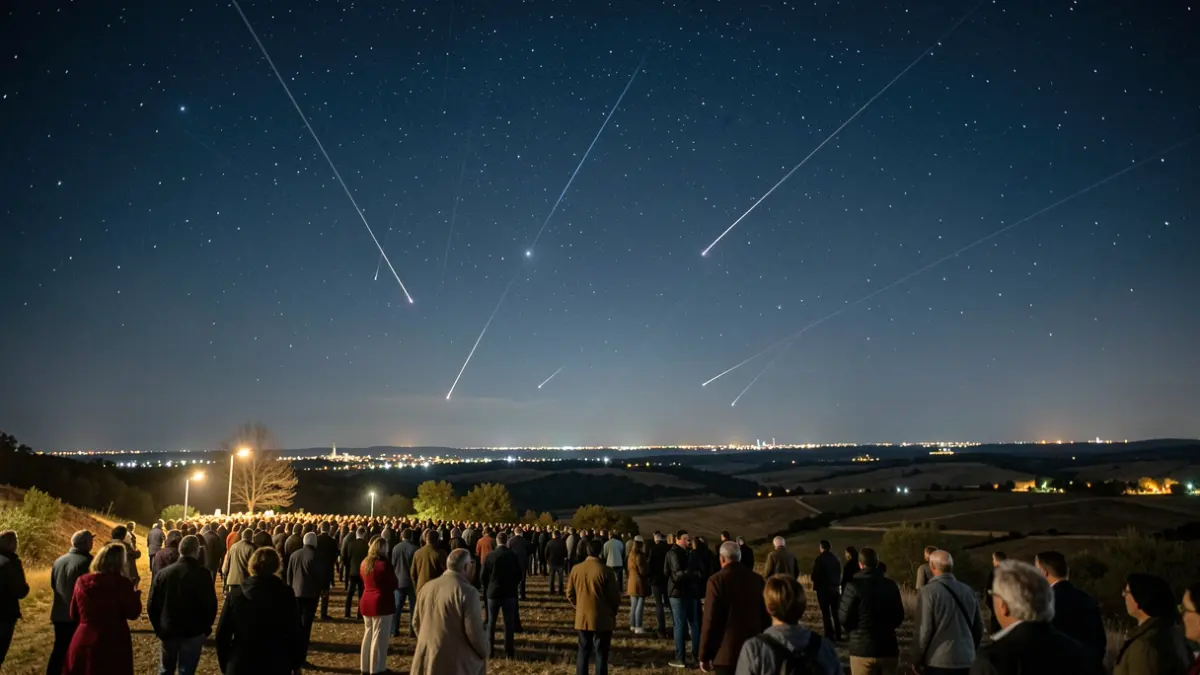
The night of August 12th to 13th will also be favorable for observing the peak activity of the Perseids. The new moon on the evening of the 12th will ensure a dark sky, perfect for enjoying this meteor shower, which experts recommend observing without telescopes or binoculars.
The National Geographic Institute (ING) indicates that the peak activity will occur between 4:00 AM and 6:00 AM on August 13th. However, a significant number of meteors will be visible from approximately 11:00 PM on August 12th, although the pre-dawn hours are usually more favorable. Conditions will remain conducive for viewing numerous shooting stars between August 8th and 16th.