This surge solidifies the region's status as one of Europe's leading audiovisual hubs. Furthermore, the Community of Madrid has been the setting for the three highest-grossing Spanish films of 2026, underscoring its prominence in national cinema.
The annual report from the regional audiovisual office, Film Madrid Region, highlights the attraction of major international projects. These include productions such as Day Drinker, which filmed in municipalities like Boadilla del Monte, San Lorenzo de El Escorial, and Villamanta, and the shooting of the fourth season of the series The Walking Dead: Daryl Dixon.
The Spanish capital is also set to host the filming of a renowned director's new movie starting October 5. The regional government, through Film Madrid Region, is working closely with the production team, providing advice on location scouting and streamlining communication with various municipalities.
Out of the total productions, 112 were feature films, 286 short films, 198 fiction series, 612 advertising campaigns, and 241 music videos. While most filming concentrated in the capital, a notable increase was observed in towns such as Alcobendas, Pozuelo de Alarcón, and Villaviciosa de Odón.
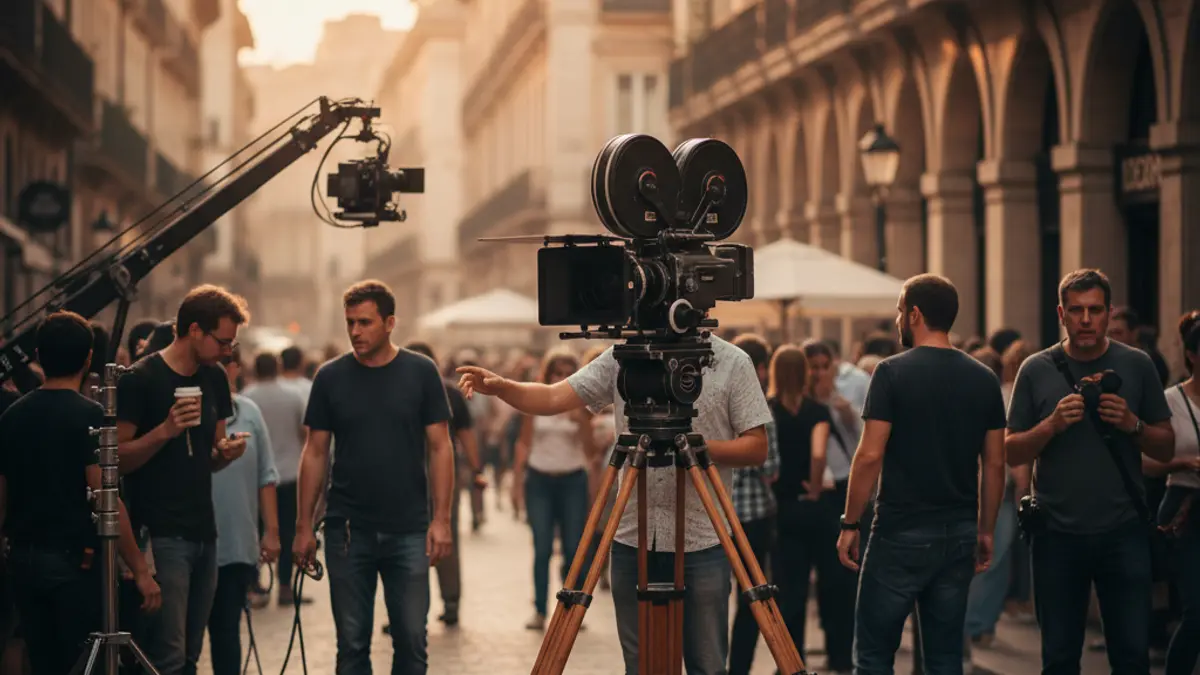
In total, over 7,300 filming days were conducted, with 70% taking place in the city of Madrid and the remaining 30% in other parts of the region. Film Madrid Region plays a vital support role, facilitating permit processing and offering guidance to production companies choosing the community for their projects.
The audiovisual industry currently contributes 2.6% to Madrid's GDP and comprises approximately 3,500 companies, generating over 29,700 direct jobs. The regional government emphasizes that the variety of locations, coupled with the presence of sound stages, animation studios, and visual effects companies, positions Madrid as a “versatile and competitive” environment compared to other major European centers like Berlin, Paris, or Rome.