The seventh edition of the municipal program, presented by the Housing Policies delegate, Álvaro González, aims to promote the improvement of Madrid's residential stock in terms of accessibility, conservation, energy efficiency, health, and safety. The call, published in the Official Gazette of the City Council and the Community of Madrid, allows applications to be submitted from this Wednesday.
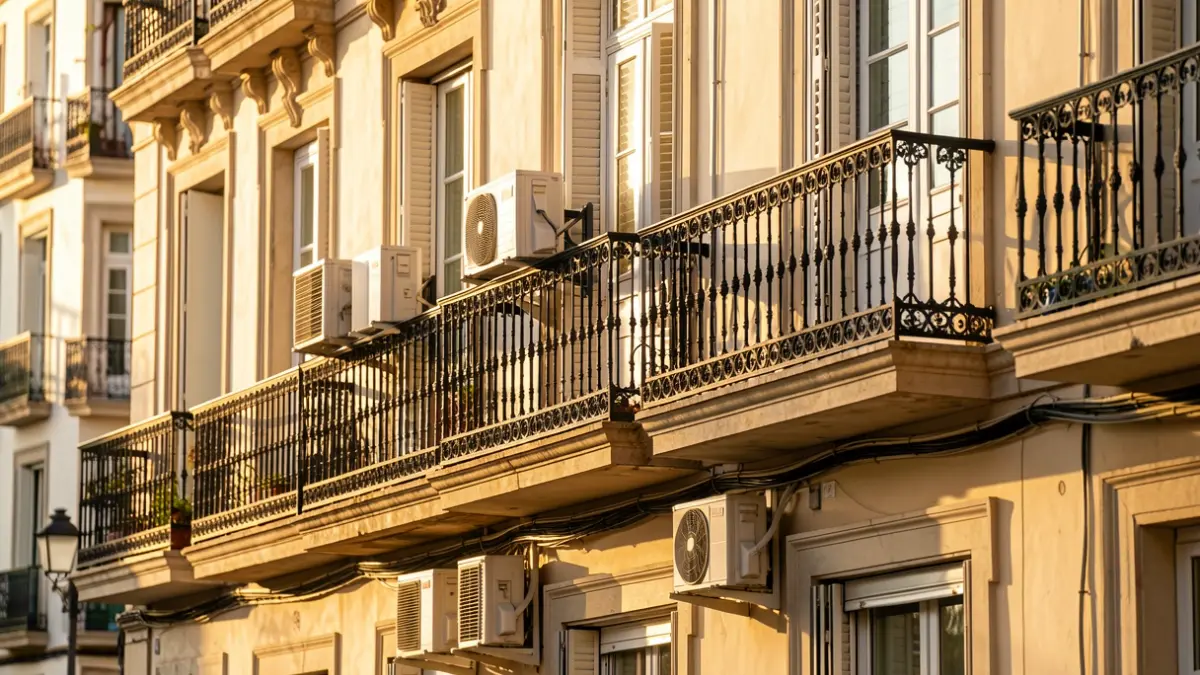
The main novelty is the urban beautification line, which increases the subsidy by an additional 5% if the works include improvements aimed at reducing visual impacts on facades and roofs. Subsidizable actions include the elimination of visible wiring, reorganization of external installations, removal or relocation of air conditioning units, concealment of drying racks, and homogenization of elements such as blinds or awnings.
González argued that the objective is to achieve safer, more accessible, and efficient buildings, but also to move towards a "more beautiful city," recalling Madrid's historical and heritage richness in contrast to an aging residential stock, with many buildings constructed before 1980.
“"Madrid is undoubtedly a city with enormous historical and heritage wealth, of which we are very proud and whose identity is reflected in its streets, its squares, its buildings, but nevertheless we have a rather aging residential stock."
The delegate emphasized that urban transformation is achieved not only by building new developments but also by conserving and modernizing the existing residential stock, consolidating the Plan Rehabilita as a key urban and residential transformation tool. Since its launch in 2020, the program has enabled the rehabilitation of over 2,400 buildings, benefiting 110,000 homes with an accumulated investment exceeding 318 million euros.
In previous calls, the average aid exceeded 101,000 euros per building (covering 60% of the cost), and applications have increased by 230%. The Plan Rehabilita 2026 is structured into six lines of action: accessibility, energy efficiency, conservation, health, safety, and urban beautification.
In energy efficiency, works have driven accumulated savings of over 282 million kilowatt-hours and have avoided the emission of more than 67,600 tons of CO2. In conservation and health, actions have been taken on structures, roofs, and facades, and the removal of asbestos has been promoted in over 5,600 homes.
“"We are improving buildings, modernizing neighborhoods, and helping thousands of Madrid families live in more accessible, efficient, and safe homes."