
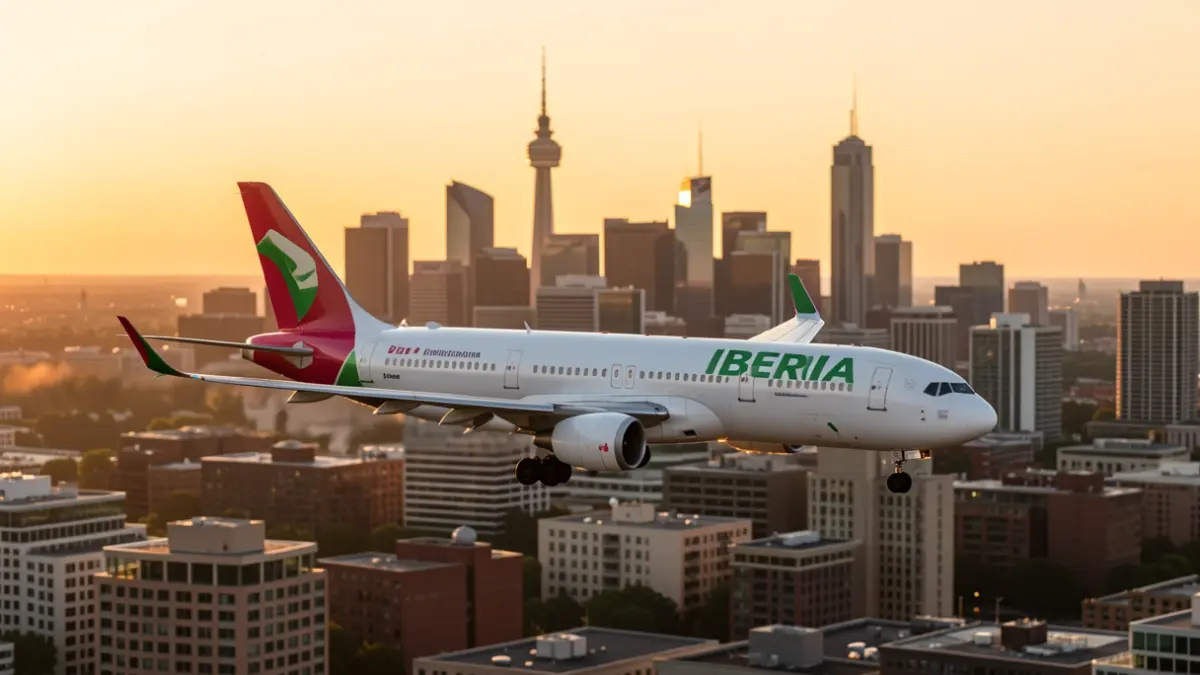
The new direct air connection between Madrid and Toronto, operated by Iberia, took off this Saturday from Adolfo Suárez Madrid-Barajas Airport. The inaugural flight will land at Toronto Pearson International Airport after a journey of just over eight hours.
This route, featuring five weekly frequencies, is part of the destination promotion plan driven by Madrid Turismo by IFEMA Madrid and the Madrid City Council. The initiative seeks to boost one of the international tourism markets with the greatest growth potential for the capital.
The launch of the connection coincides with a significant increase in Canadian tourism to Madrid. In 2025, the city welcomed 88,285 travelers from Canada, a 5.5% rise compared to the previous year. The number of air passengers grew by 17.4%, and the average spending per person stood at 553.60 euros.
Data from 2026 confirm this positive trend. Between January and April, Canadian traveler overnight stays increased by 8.2%, while the number of visitors rose by 9.5% compared to the same period last year.
The delegate councilor for Tourism, Almudena Maíllo, highlighted the importance of this new route, calling it 'very positive news for tourism, for strengthening economic and strategic relations with Canada.' According to Maíllo, it represents 'a decisive step in our commitment to North America, one of the highest-value markets for the city.'
Maíllo also noted that the connection will allow Canadian travelers to discover 'a welcoming, safe, and unique city in the world,' and emphasized that this new link reflects the collaborative work between administrations and companies to promote Madrid's international projection.
The route is part of the Madrid Turismo by IFEMA plan, developed by the Madrid City Council, the Community of Madrid, and IFEMA Madrid, with the collaboration of entities such as Iberia.
North America is consolidating as a key area for Madrid's air connectivity. By June 2026, Madrid will have over 1.5 million direct seats to the United States, Canada, and Mexico, across 38 routes and nearly 5,600 flights connecting the capital with 20 cities on the continent.
The United States remains Madrid's primary international source market, with 1,103,443 visitors in 2025 and direct connections to cities such as New York, Boston, Miami, Chicago, Dallas, and Washington. Meanwhile, Mexico will contribute nearly 483,000 scheduled seats for 2026.
Canada completes this network with approximately 64,000 direct seats planned for this year, a 34.2% increase from 2025, and connections to Toronto, Montreal, and Halifax, solidifying Madrid as a primary gateway from North America to Europe.