The rise in global temperatures makes the presence of trees in urban environments like Madrid increasingly vital. These elements not only beautify the city but also fulfill essential functions in mitigating the effects of heat and pollution.
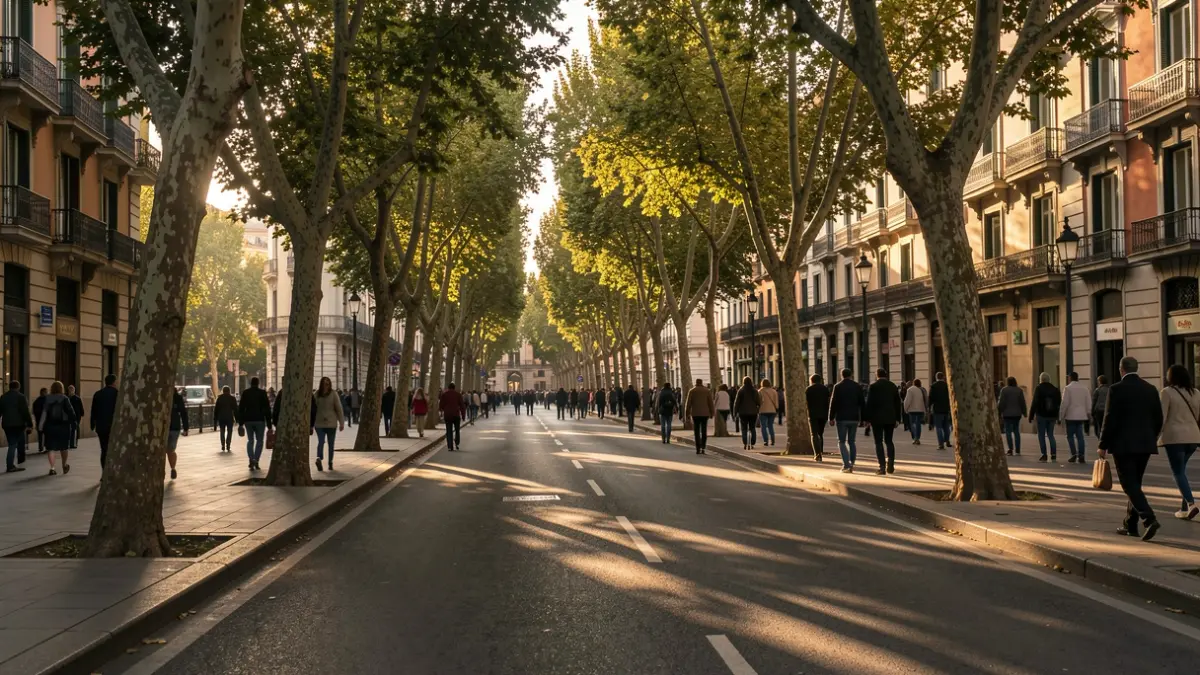
Streets such as General Álvarez de Castro in Chamberí exemplify the importance of community mobilization in preserving urban greenery. In the late eighties, an underground parking project threatened to drastically reduce the double row of trees on this avenue, limiting root space and hindering their development.
In contrast, Narváez street illustrates the consequences of a lack of citizen action. The construction of underground parking facilities progressively eliminated the tree lines, making it an unpleasant experience to walk along this area during the hottest hours.
Wide streets and large avenues are most suitable for housing large trees and double rows, thereby maximizing shade. However, in narrow streets of the historic center, where buildings already provide shade and tree pits can obstruct pedestrian traffic, planting should be more selective. It is also not recommended in front of historically significant monuments, such as the Astronomical Observatory, where recently planted trees obscure its visibility.
Plazas, far from being granite and cement spaces, should be areas for community gathering with sufficient vegetation and shade. Pergolas, with or without climbing plants, are a useful alternative. Plaza de Olavide demonstrates that it is possible to integrate gardens over underground parking lots, creating pleasant spaces for residents.
The recovery of boulevards, similar to those that once existed in Madrid, could be a solution for wide streets. These areas, featuring up to four rows of trees and green spaces, were designed for leisurely strolls and citizen encounters, unlike current thoroughfares prioritized for vehicular traffic.
The benefits of urban trees extend beyond shade: they cool the environment, produce oxygen, absorb carbon dioxide, retain pollutants, and act as acoustic barriers. Madrid, with nearly five million trees, is one of the most tree-rich cities globally, although some areas still lack sufficient shade due to insufficient planting, inadequate species, poor maintenance, or infrastructure like parking lots and terraces.