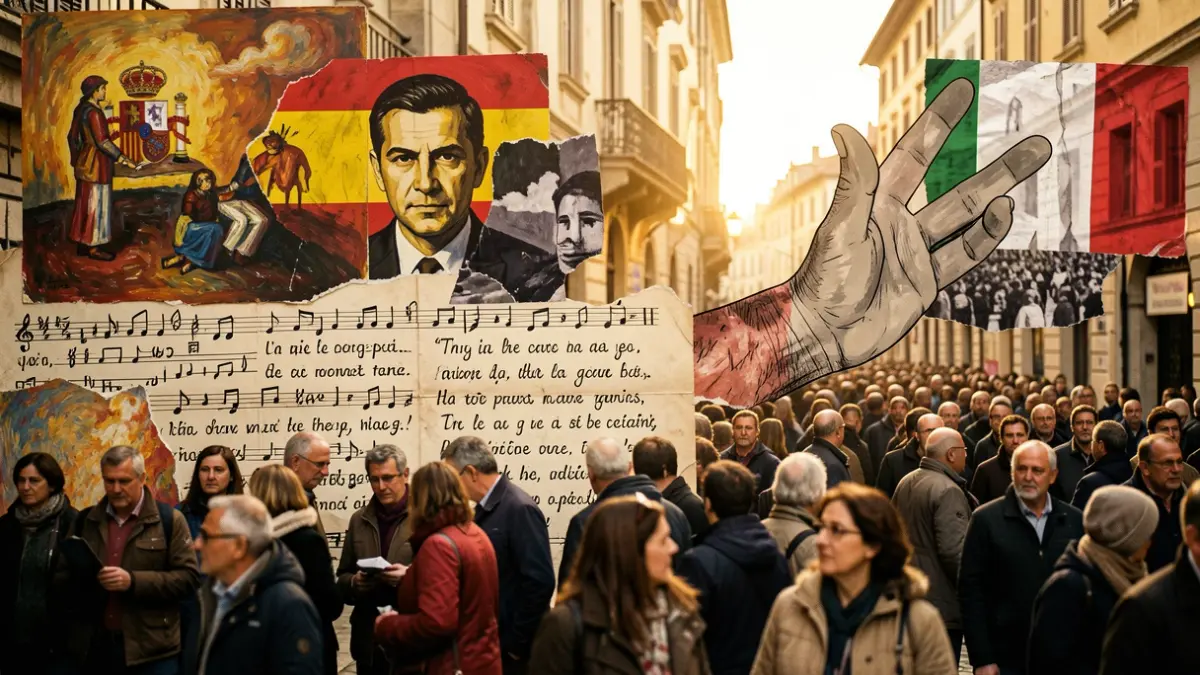
The CCOO's 1º de Mayo Foundation organized in Madrid an exhibition that paid tribute to the 'Amnistía: Que trata de España' show, held in Milan in March 1972. This cultural and political initiative, jointly organized by the Italian trade unions CGIL, CISL, and UIL along with the then clandestine Comisiones Obreras de España and with the collaboration of the PCE, aimed to raise funds to support workers' struggles and the families of anti-Franco political prisoners, while internationally denouncing the repression of Francisco Franco's dictatorship.
The exhibition's title, proposed by Rafael Alberti, was inspired by Blas de Otero's poetry collection Que trata de España. The exhibition featured the participation of nearly three hundred renowned European and Spanish artists, intellectuals, and musicians, such as Pablo Picasso, Joan Miró, Antoni Tàpies, Pablo Neruda, and Juan Genovés, among many others. The resulting documentary of the artistic interventions remains a moving testimony of the era.
A notable aspect of the initiative was the clandestine transport of numerous artworks from Spain to Italy, risking arrests and police reprisals. Artists and militants like Juan Genovés and Tino Calabuig actively participated in this dangerous transfer. The exhibition was not limited to art, also including poetry recitals, concerts, film screenings, and anti-Franco propaganda material, demonstrating an extraordinary alliance between culture, the labor movement, and international solidarity.
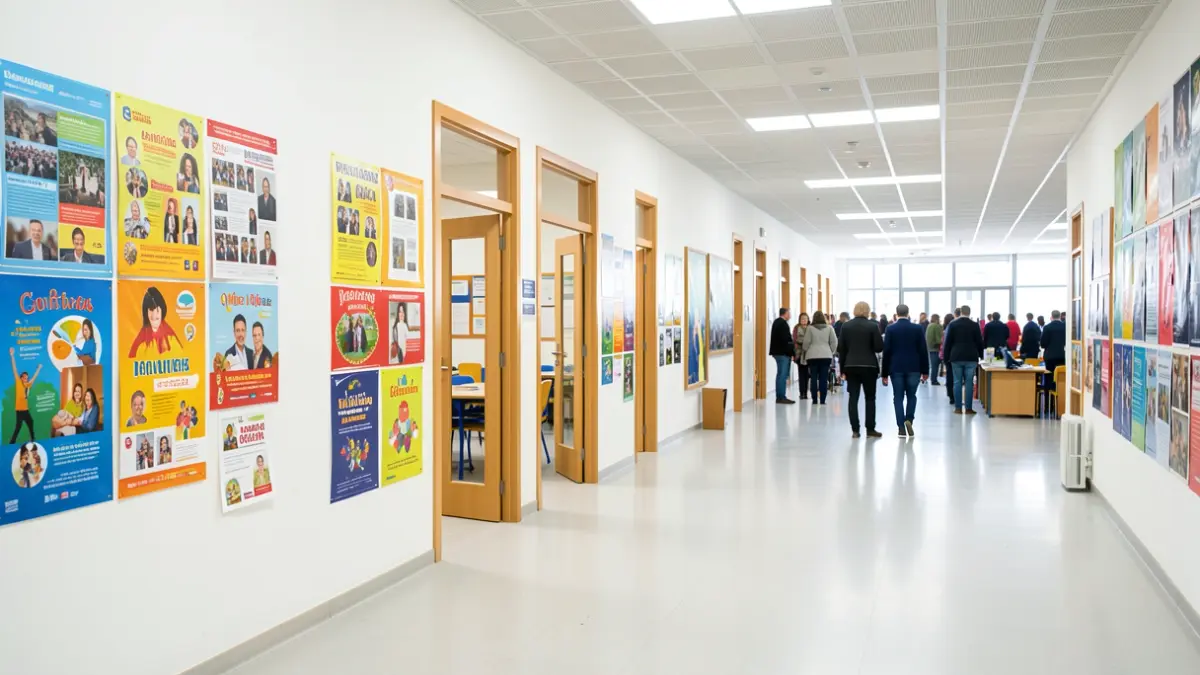
Forty-five years later, in 2017, the CCOO's 1º de Mayo Foundation recovered part of this memory with the exhibition Amnistía. Que trata de España. Arte y solidaridad (Milán 1972-Madrid 2017), presented at the Madrid History Museum. The Madrid show evoked the artistic dimension and democratic values of the original, contributing to the recovery of the country's democratic memory. It featured the temporary loan of thirteen paintings from the CGIL.
The Madrid exhibition was inaugurated by the then general secretary of CCOO, Ignacio Fernández Toxo; the mayor of Madrid, Manuela Carmena; the head of European and International Policies of the CGIL, Fausto Durante; and the general secretary of CCOO of Madrid, Jaime Cedrún. The event brought together singer-songwriters, trade unionists, labor lawyers, and individuals committed to democratic memory, countering revisionist and neo-Francoist discourses.
The curators of the Madrid exhibition were Ana Abelaira, Susana Alba, and José Babiano, with the general coordination of Bruno Estrada. The article's author particularly highlights the documentary accompanying the exhibition, a modest yet moving work that conveyed the importance of the initiative and the international solidarity with the Spanish labor movement and the clandestine Comisiones Obreras.
Today, facing a context of regression in values such as solidarity and democratic memory, threatened by reactionary positions, the author suggests the advisability of re-exhibiting this show in different cities across Spain to preserve collective memory and transmit to younger generations the value of the struggle for freedom and social rights.