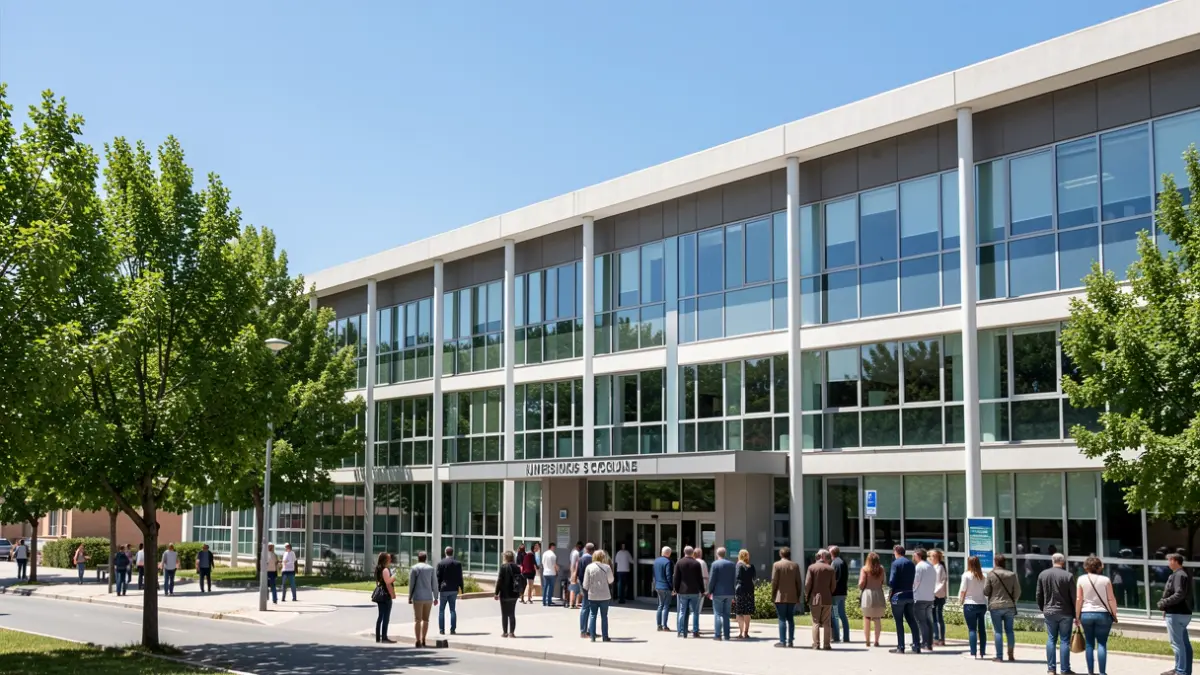
Amidst high demand for healthcare degrees, the Fundación Jiménez Díaz-Universidad Autónoma de Madrid (FJD-UAM) Nursing School reaffirms its standing. Founded in 1962, the school operates two campuses within the Community of Madrid: one at the Hospital Universitario General de Villalba, accommodating 50 students per year, and another in Pintor Rosales, near the Hospital Universitario Fundación Jiménez Díaz, with space for 140 students. This proximity to hospitals facilitates essential clinical practice.
The Villalba campus, offering 50 places annually, sees significant demand, reflecting growing interest in studies focused on patient care and humanized healthcare. Dr. Paloma Rodríguez, the school's director, emphasizes: "Our motto is that we train people who care for people. That already gives an idea of how we care for our students. We work with them through personalized education, and teaching innovation is one of our priorities."
The FJD-UAM educational model integrates innovative teaching methodologies, technology applied to learning, and values-based education. Adapted to the European Higher Education Area, the program includes online platforms, gamification, virtual reality, 3D printing, and a proprietary digital platform for online clinical practice tracking, ensuring fluid communication between tutors and students.
A cornerstone of the program is clinical simulation, introduced from the first year. The Advanced Clinical Simulation Center, equipped with high-fidelity technology, allows students to undertake approximately 200 hours of practice in safe environments that replicate real-life scenarios. This methodology fosters the development of technical skills, decision-making, critical thinking, communication, empathy, and teamwork.
Dr. Rodríguez explains the significance of simulation: "The simulation center has specific technology and spaces for students to have total immersion, very similar to what they will find later in the hospitals where they will do their clinical practices. For example, when training in an Intensive Care Unit (ICU) environment, they work with the same equipment, the same pumps, and the same monitors they will see in real practice; this helps the student to know the environment beforehand and go with more confidence."
Beyond technical preparation, the school prioritizes training in human competencies and values. Methodologies are employed to enhance the student experience and promote the humanization of care, fostering social, communicative, and relational skills. The director notes: "To be a good nurse, very important qualities are needed, such as empathy, compassion, active listening, or knowing how to work in a team; from our school, we contribute to this by working very personally with the students."
Personalized support is another distinguishing feature, facilitating the monitoring of academic progress and the development of responsible attitudes. The school also offers a wide range of postgraduate programs and boasts high employability, reflecting training connected to the current needs of the healthcare sector.