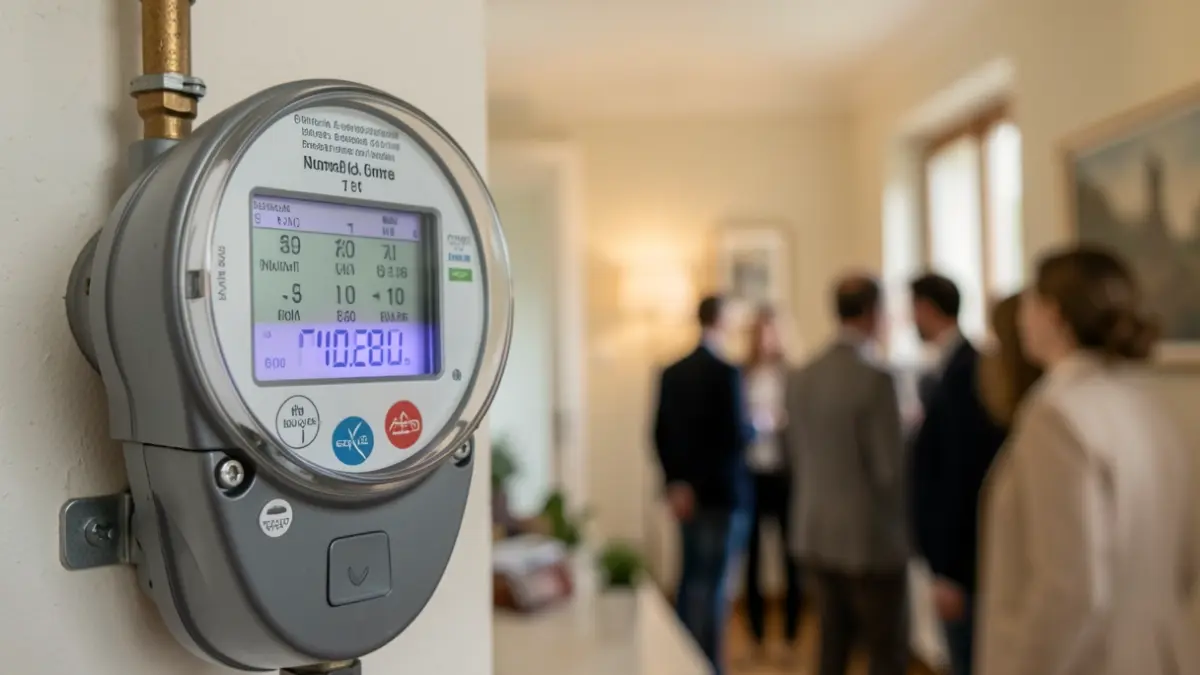
The remote reading system for potable water meters implemented by Canal de Isabel II in the Community of Madrid has enabled alerts to over 69,000 users regarding unusual consumption in their homes this year. This technology, already present in 93% of the region's equipment (over 1.55 million), has achieved water savings equivalent to more than 6,000 Olympic swimming pools.
The meters utilize NB-IoT technology, positioning the company as a national and international benchmark in its deployment. It is projected that by the end of 2026, remote reading will cover 100% of the 1.6 million devices, recording measurements every hour, which multiplies available data by 1,460 compared to the previous bi-monthly manual readings.
The analysis of this information has led to alerts for over 155,000 customers in the last three years due to anomalous consumption patterns indicative of internal leaks. These automatic notifications have saved approximately 37 cubic hectometers of water, equivalent to over 11,000 Olympic swimming pools.
Users can check their consumption details and set up personalized alerts through the Canal de Isabel II Virtual Office at no extra cost. More than 8,000 customers are already using this feature to detect consumption outside established levels, which can help identify leaks, irregular usage, or issues in vacant homes or those of dependent individuals. In the latter cases, the company informs the contacts associated with the contract.
In addition to improving domestic management, remote reading provides valuable data for optimizing the general supply network, facilitating comparisons between different zones and more efficient demand planning.