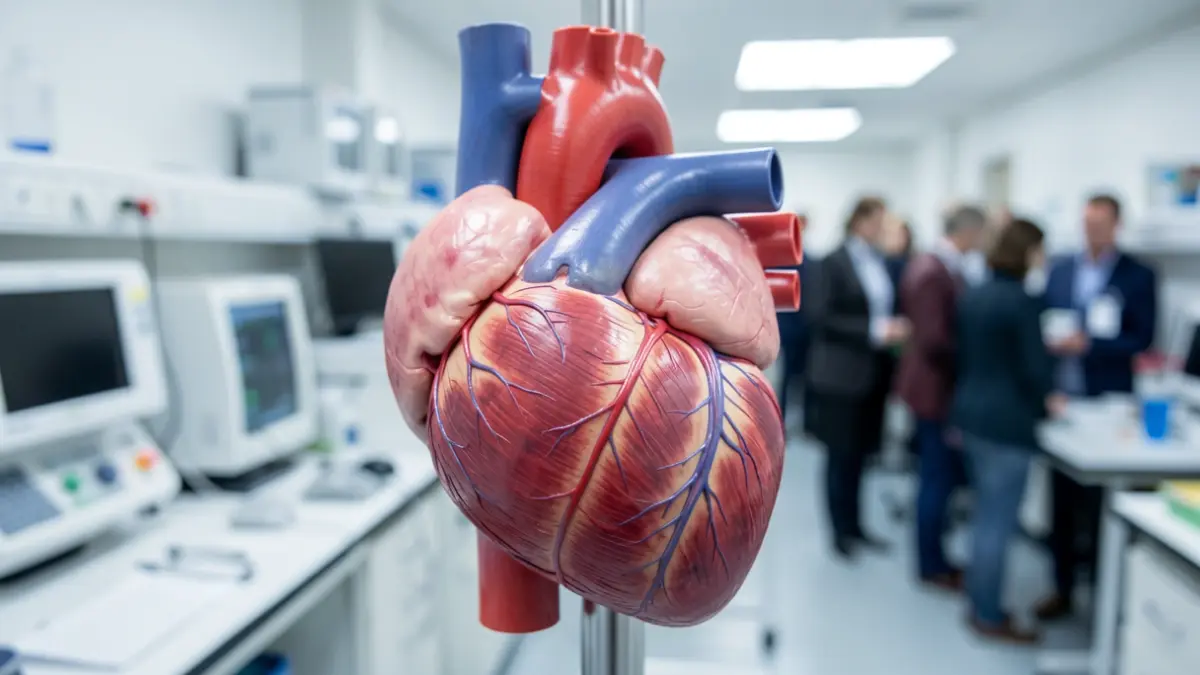
The study, which analyzed 1,160 patients from 22 centers in Spain and the Netherlands, concludes that the presence of hypertrabeculation is not associated with a higher risk of embolic events, advanced heart failure, or severe ventricular arrhythmias. The findings are published in the journal Circulation.
Left ventricular hypertrabeculation, previously considered an independent disease (non-compacted cardiomyopathy), is defined as an increased number and/or thickness of trabeculae in the left ventricle. For years, it was linked to a higher risk of heart failure, arrhythmias, and thromboembolic phenomena, leading to more aggressive treatments like preventive anticoagulation.
After a mean follow-up of over five years, led by Dr. Pablo García-Pavía, head of the hereditary cardiomyopathies group at CNIC and cardiologist at Hospital Universitario Puerta de Hierro, it was observed that patients with hypertrabeculation showed a similar clinical evolution to those without it. The true prognostic factors were already known variables such as ventricular ejection fraction, cardiac fibrosis, or genetic alterations.
One of the most relevant findings, highlighted by Dr. Nerea Mora, cardiologist at Hospital Puerta de Hierro and lead author, is that hypertrabeculation does not increase the risk of cerebral or systemic embolisms, even in patients with significantly reduced cardiac function and no atrial fibrillation. This questions the need for preventive anticoagulation based solely on this characteristic.
Genetic analysis showed that the frequency of hypertrabeculation varies by genetic cause, but its presence did not alter clinical risk within any of the analyzed genetic groups, confirming it does not lead to a worse prognosis.
The authors emphasize that this is the largest study to date using cardiac magnetic resonance imaging and genetic analysis. The results support considering hypertrabeculation as another phenotypic trait within dilated cardiomyopathy, without independent prognostic value or specific therapeutic implications.