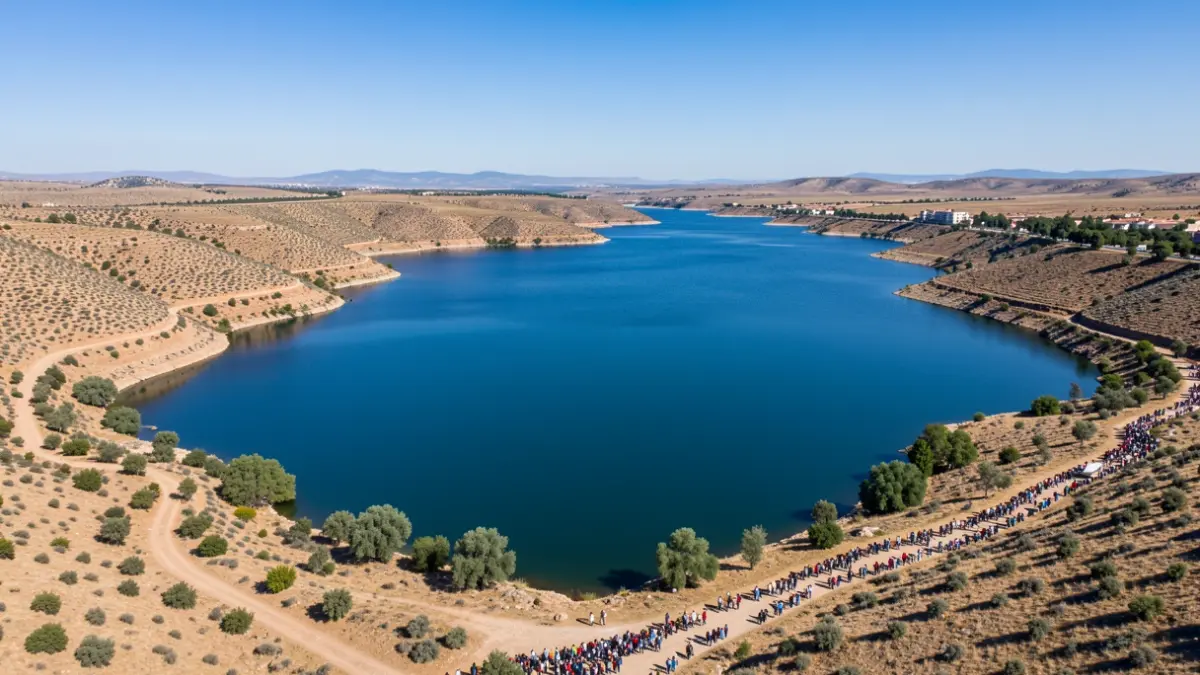
The reservoirs supplying the Community of Madrid have begun the month of June at 83.9% of their maximum capacity. With 791.8 cubic hectometers stored, reserves are 2 percentage points above the historical average for this date, which stands at 81.9%.
During the month of May, recorded rainfall was 8.1% higher than the historical average, with 64.5 l/m² compared to the usual 59.7 l/m². However, water contributions to the reservoirs were 42.9 hm³, 47.8% lower than the monthly average (82.1 hm³). This discrepancy is attributed to irregular rainfall, with nearly 60% concentrated in the first half of May, while the second half of the month, warmer and with less continuous precipitation, reduced runoff generation.
Despite this, for the hydrological year as a whole, total contributions are 3.4% above the average, reaching 708.8 hm³ compared to the average of 685.3 hm³.
High temperatures in May also impacted water consumption in the region. Demand was 9.9% higher than in the same month of 2025, reaching 46.3 hm³ compared to 42.1 hm³ last year. Year-to-date consumption stands at 196.9 hm³, an 8.6% increase compared to the same period last year.
The current hydrological situation in the Community of Madrid is favorable, and supply is guaranteed. Nevertheless, Canal de Isabel II reiterates the importance of responsible water use as a constant habit, regardless of the time of year or scarcity conditions.
The water cycle management entity has intensified its efforts in reuse processes, pipe renewal, active leak detection, and digitalization, including smart meter remote reading for early anomaly detection. Thanks to public awareness and investment in improving and optimizing infrastructure management, per capita water consumption in the Community of Madrid has decreased by over 30% since the last drought in 2005, while ensuring quality service and protecting the environment.