
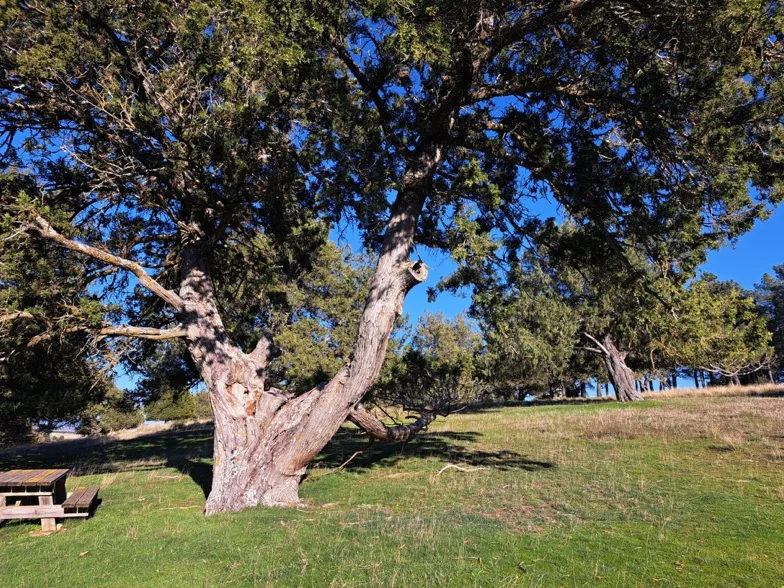
Mature forests in Spain harbour a valuable part of biodiversity, characterised by trees of different ages and very old trees with a large number of diverse microhabitats. In these environments, such as alder juniper (Juniperus thurifera) forests, the mosses and lichens growing on the bark and dead wood can provide clues about the maturity and complexity of the forest.
The RJB-CSIC research team has studied the mosses and lichens in 38 plots from the Fourth National Forest Inventory (IFN4) distributed across the Iberian Peninsula. Initial identifications have recorded 128 bryophyte taxa and 245 lichen species, considerably expanding existing inventories. Preliminary lichen analyses show lineages whose characterisation points to three genera and 47 species new to science.
“"The bioindication analyses show some trends in bryophytes. Syntrichia virescens, a moss typical of developed tree bark, emerges as an indicator of mature alder juniper groves, while Tortella humilis and other more cosmopolitan and generalist species were associated with younger stands."
To create a genetic database, the team obtained 991 DNA sequences from a selection of 370 species. The sequences are being gathered in a reference library of molecular barcodes (DNA barcodes), which is expected to be incorporated into the public GenBank repository soon. This will allow future studies to compare the DNA of their samples with identified references.
“"Applying the same method in different types of forest will allow us to compare their communities and check which species help recognise mature stands in each formation. This information will help competent local authorities make decisions and adopt early and effective conservation measures."