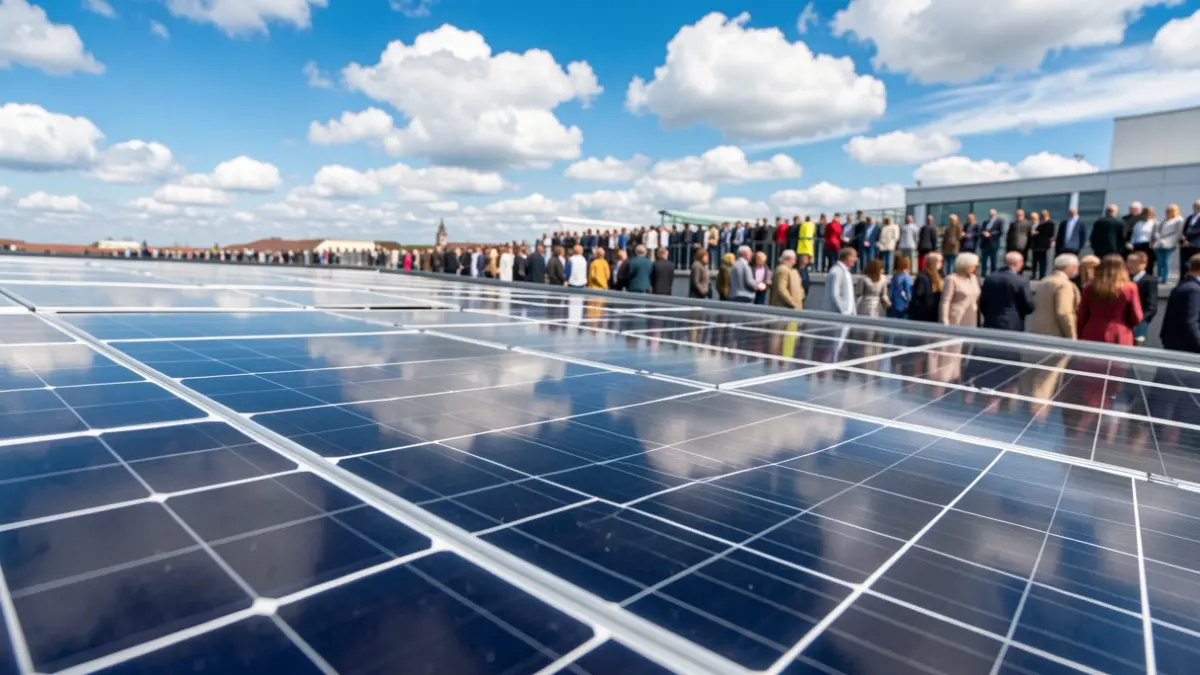
These new infrastructures, contributing nearly 21 megawatts (MW) of power, are part of the public company's Solar Plan. The goal is to increase renewable energy production, reduce dependence on the electrical grid, and lower carbon emissions.
Among the notable plants are those located at the pumping stations in Soto del Real and Miraflores, as well as the Wastewater Treatment Plant (EDAR) of La Reguera, in Móstoles. The new facilities, adding approximately 4 MW of power, are in the final stages of preparation and will be operational soon.
The Solar Plan is a key initiative within the company's energy transition. The public company aims to be the first water sector company in Europe to achieve 100% self-sufficiency by 2030, generating an amount of energy equal to or greater than it consumes.
The majority of the energy generated is consumed directly at the production sites, reducing demand from the electrical grid. In some locations, surplus energy is fed into the general electrical system.
The new installations are being integrated with existing generation technologies, such as hydraulic, mini-hydraulic, and biogas utilization systems, thereby optimizing energy management and resource use. Cutting-edge technologies are also being applied to improve operational efficiency and reduce the carbon footprint.
Energy neutrality further strengthens the autonomy and resilience of the hydraulic infrastructures managed by Canal de Isabel II. By progressively increasing its own generation capacity and optimizing the use of processes associated with the integral water cycle, the company is moving towards a more efficient model, less exposed to market volatility, and better prepared for the challenges of increasing demand.
Since the launch of its first photovoltaic installation in 2021, the public company has significantly grown its renewable generation capacity. By 2027, approximately 63 plants are expected to be in service, reaching a total capacity of nearly 43 MW. This will involve an investment exceeding 50 million euros, partially funded by European REACT-EU and FEDER funds.